

How to Balance Gymnastics Training and School Without Burning Out
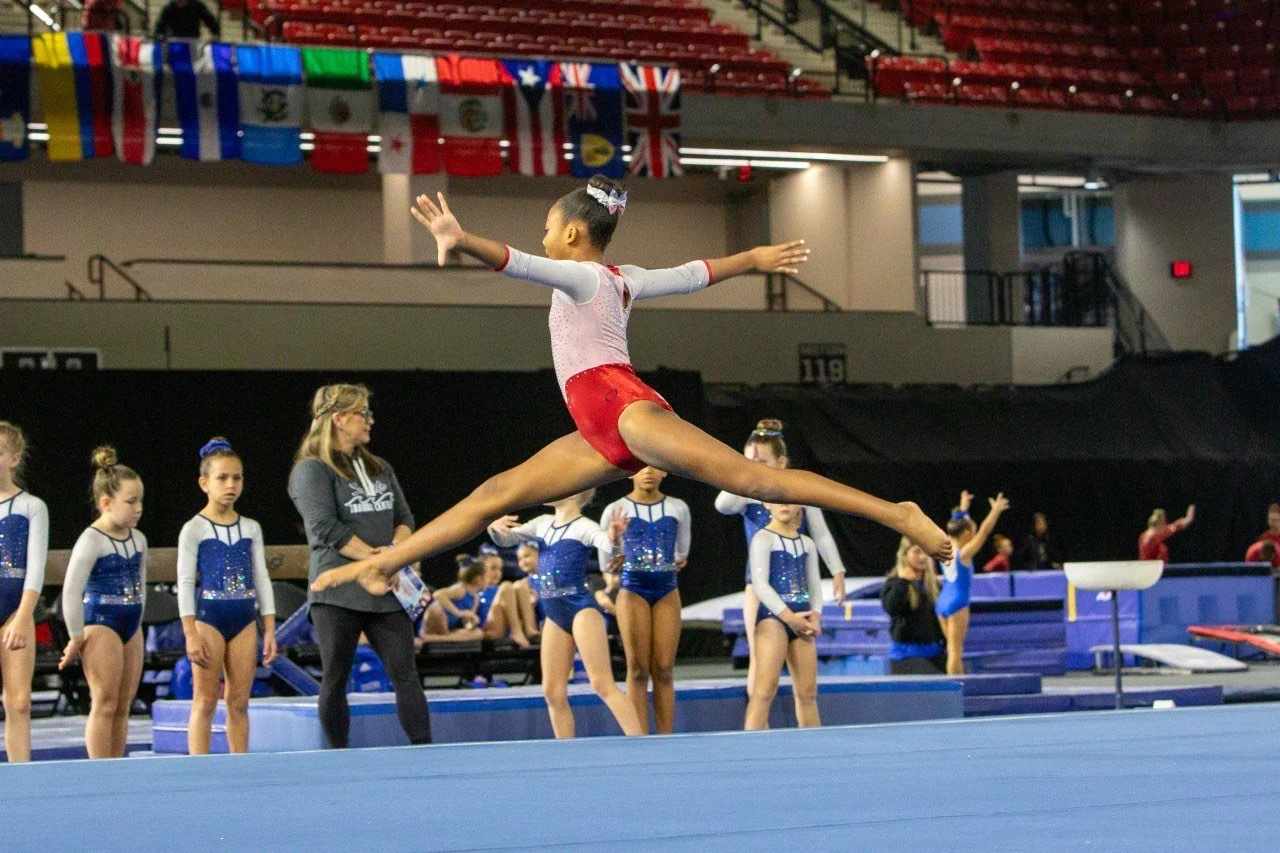
Gymnast completing a leap
If you're the parent of a competitive gymnast, you've probably asked yourself the same question more than once.
"How long can we keep this up?"
Competitive gymnastics is more than an after-school activity. It quickly becomes a way of life—not just for the athlete, but for the entire family. Your calendar revolves around practice schedules, private lessons, strength training, competitions, travel, and recovery. Every week requires careful planning, and even then, it often feels like there simply aren't enough hours in the day.
For many families, the challenge isn't choosing between school and gymnastics. Both matter deeply. You want your child to receive an excellent education, and you also want them to pursue the sport they love. The real challenge is trying to make two demanding schedules fit together when neither was designed with the other in mind.
A typical weekday begins before sunrise. Breakfast is packed into the car because there isn't time to sit at the table. School fills most of the day before it's time to rush to the gym. A quick snack is eaten somewhere between school pickup and practice. Dinner comes from a lunch bag, cooler, or drive-thru because everyone is racing to the next commitment. Homework doesn't begin until late in the evening, when your child is mentally and physically exhausted. Before long, it's bedtime—and only a few hours later, the entire routine begins again.
Many parents tell themselves it's just a busy season.
"It'll slow down after this meet."
"Once we get through this level, things will get easier."
But for many gymnastics families, they don't.
As gymnasts advance, practices become longer. Competitions become more frequent. Expectations increase. Recovery becomes even more important. The school day, however, rarely changes.
Eventually, parents stop asking how to fit everything in and begin asking a different question.
"Is there a better way to do this?"
The Hidden Costs of Trying to Do It All
When every hour of the day is already spoken for, something inevitably gets pushed aside.
Sometimes it's family dinners around the table.
Sometimes it's downtime with friends.
Too often, it's the things that young athletes need most: proper nutrition, adequate sleep, recovery, and enough mental energy to actually learn.
Most parents understand that nutrition matters, but the reality of a gymnastics schedule doesn't always make it easy. Breakfast is eaten in the car. Snacks live in a gym bag. Dinner is whatever can be packed ahead of time or picked up between school and practice. Families aren't choosing convenience because they don't care about healthy eating. They're choosing it because there simply isn't enough time.
The challenge is that nutrition isn't just about keeping kids from getting hungry. For growing athletes, it helps fuel training, support healthy development, replenish energy stores, and aid recovery after hours of repetitive physical activity. When children are consistently rushing from one commitment to the next, eating well becomes harder—not because parents aren't trying, but because the schedule leaves very little margin.
Recovery is another piece that's easy to underestimate.
Many people think athletes become stronger because they practice.
In reality, practice creates the stress. Recovery is when the body adapts.
Sleep, hydration, proper nutrition, and rest are all part of training—not rewards after training.
When a child finishes several hours of practice, still has homework waiting, showers, packs for the next day, and wakes up before sunrise to do it all again, recovery time gets squeezed. Over weeks and months, parents may begin noticing persistent fatigue, lingering soreness, decreased focus, emotional outbursts, or a child who no longer seems excited about the sport they once loved.
Those aren't always signs that gymnastics is the problem.
Sometimes they're signs that the schedule has become unsustainable.
School Shouldn't Be What's Left at the End of the Day
After spending hours in school and several more hours training, many children simply don't have much left in the tank.
Homework that should take thirty minutes stretches into two hours.
Simple math problems suddenly feel impossible.
Reading assignments require constant reminders to stay focused.
Everyone becomes frustrated.
Parents often assume their child needs to try harder or become better at managing their time.
But no amount of time management creates more hours in the day.
The issue usually isn't motivation.
It's exhaustion.
Children learn best when they're mentally available to learn—not when they're trying to finish homework after one of the most physically demanding youth sports in the world.
The Goal Isn't an Easier Education
This is where many families hesitate.
They worry that changing schools means lowering expectations.
It doesn't.
The goal isn't to make academics easier.
The goal is to find an educational model that allows your child to meet high academic expectations without sacrificing their health, recovery, family life, or passion for gymnastics.
For some families, homeschooling provides that flexibility.
Others prefer the structure and accountability of an online school.
Some choose microschools because they offer smaller classes and more personalized instruction.
There isn't one right answer for every family.
But there are far more options today than many parents realize.
Sometimes the biggest change isn't reducing what your child is capable of.
It's removing the unnecessary obstacles that make succeeding in both school and athletics feel impossible.
You Don't Have to Figure This Out Alone
If this article felt familiar, you're not the only parent asking these questions.
Many families begin exploring different educational options not because their child is struggling academically, but because the current schedule simply isn't working anymore.
That's exactly why I created The Parent's Guide to Alternative Education.
Inside, you'll learn the differences between homeschooling, online schools, microschools, and hybrid learning, which families tend to thrive in each model, and the questions every parent should ask before making a change. It also includes information specifically for families whose children have demanding schedules, including student-athletes and performers.
The goal isn't to convince you that one educational path is better than another.
It's to help you understand your options so you can choose the one that best supports your child, your family, and the life you're already living.